
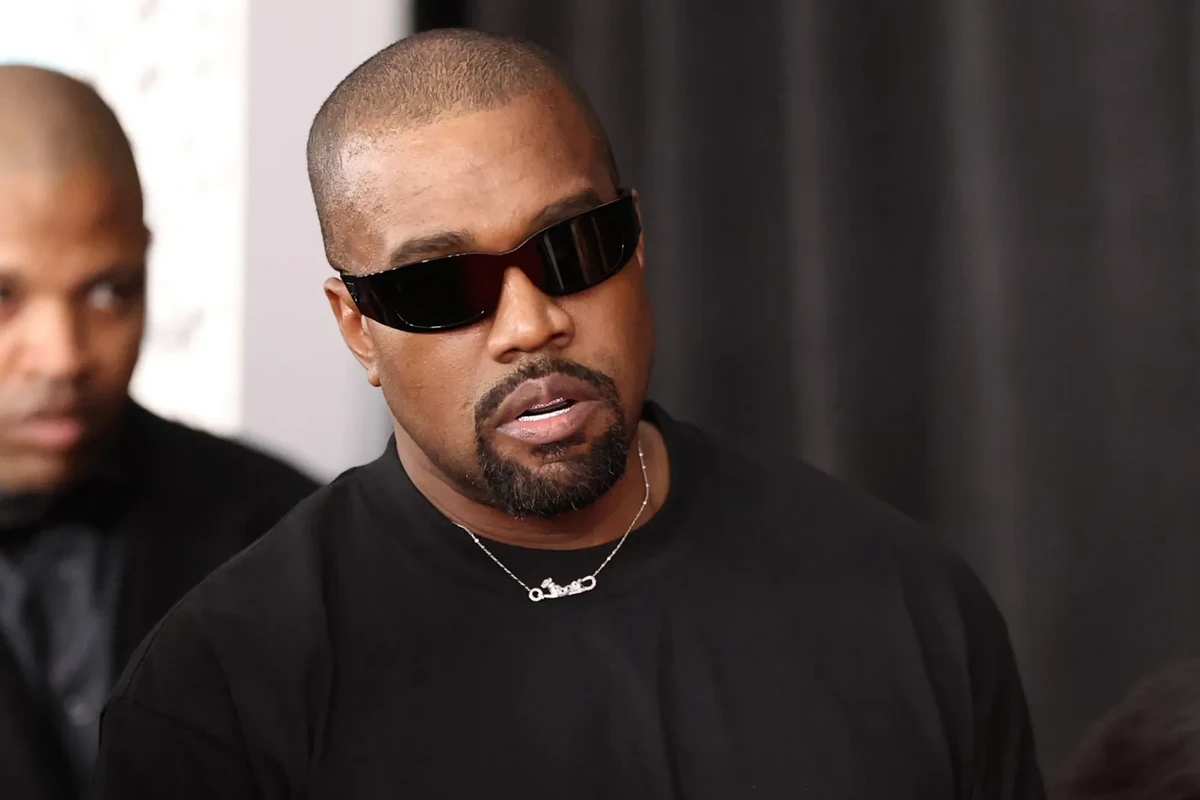

When Kanye West ordered demolition inside the Tadao Ando–designed Malibu mansion he purchased for $57.3 million in 2021, did his decisions lead to serious physical and financial harm for one of his construction workers, or were the claims fabricated to extract money from the wealthy rap artist now known as Ye?
That was the question put to jurors Tuesday during opening statements at a trial in downtown Los Angeles. The plaintiff, Tony Saxon, sat in court as his lawyer portrayed Ye as a volatile visionary who allegedly ordered Saxon to hollow out the beachfront mansion designed by the Pritzker Prize–winning Japanese architect as part of an ever-shifting engineering experiment. Ye’s attorneys countered that Saxon was an independent contractor, operating without a license, who earned more than $240,000 for roughly six weeks of work and is now seeking compensation for problems of his own making.
“Like the rest of us, Tony is not perfect. Like the rest of us, he has weaknesses. But he’s intensely loyal, intensely hard-working. He shows up and works hard. And he’s bi-polar. He goes through high highs and low lows,” Saxon’s lawyer, Ron Zambrano, told the jury.
Zambrano said Ye’s now-wife, Bianca Censori, first contacted Saxon for some interior work at the home based on a referral. It was September 2021, when Censori was working for Ye while pursuing her architectural license. At the time, Ye was still married to reality TV star Kim Kardashian. Saxon, the lawyer said, was soon hired as a project manager, security guard, and live-in caretaker at the contemporary poured-concrete home on the sandy beach along the Pacific Ocean.
One morning before dawn, Ye arrived in a Lamborghini and took Saxon to breakfast at McDonald’s, Zambrano said. “Ye notices Saxon doesn’t smell good [because] he’s living on the floor. He invites him to the Nobu [hotel], and the 22-time Grammy winner, global icon, then husband of Kim Kardashian draws Mr. Saxon a bath, lends him clothes, and then sends him back to the house,” the lawyer said. At the time, Saxon thought Ye was “a nice guy,” the lawyer added.
Zambrano said Ye envisioned transforming the property into an “off-the-grid shelter” that was “simple, fresh, clean, with everything removed to be ultra-minimalist.” According to the lawyer, Ye wanted toilets, plumbing, windows, electrical outlets, wiring, a jacuzzi, and fireplaces all ripped out and carted away.
“He wanted no toilets. If people had to go Number 2, it was a hole in the ground,” Zambrano said. When Saxon was asked to help remove the “beautifully made” chimney stacks, he seriously injured his back, the lawyer said.
Pacing in front of a jury of seven women and five men, Zambrano said Ye’s plans also included replacing cement steps with a three-story slide descending into a pool near the ocean. Saxon, he claimed, was asked to oversee work at the house without permits.
When a neighbor, identified as an Israeli ambassador, allegedly complained about construction noise, Saxon attempted to befriend him, Zambrano said. The lawyer argued that Saxon was later fired after raising concerns that generators at the site posed a risk of fatal carbon monoxide poisoning. He said his client is still owed $75,000 for completed work, and he claimed Saxon’s injuries caused lasting harm, leaving him unable to stand for extended periods or continue his work as a rare-records dealer.
“Ye didn’t just dismantle this beach house, he dismantled the rule book,” Zambrano said. “[Saxon] was in the way, and he was removed.”
When it was his turn to speak, Ye’s lawyer, Andrew Cherkasky, offered a sharply different account. He said Saxon was paid handsomely for six weeks of work on the “architectural gem” that Ye respected as a minimalist masterpiece. According to Cherkasky, Ye envisioned living in the home with his kids in a style akin to beach camping. Saxon, he said, was hired to perform “renovation prep work” but instead “destroyed the Ando house.”
Cherkasky argued that Saxon wanted to keep the project “under the radar” because he feared building inspectors might ask questions. Saxon was worried “he’d be busted for being unlicensed,” the lawyer said the evidence would show.
“It was Saxon who set for himself an impossible standard. He wanted to work 24/7. He wanted to camp at the house. He wanted to be the guy in charge,” Cherkasky said. “Ye will tell you he was shocked hearing there was no bathroom there. … Nobody asked [Saxon] to stay there, certainly not overnight.”
The lawyer said Saxon later told a mental health professional that he had quit his job with Ye. Cherkasky also claimed there’s “not a single medical record” showing Saxon was injured on the job.
“[Saxon] claimed he broke his neck working for Ye. He did not,” Cherkasky said. “He’s a guy who had almost nothing who came across an opportunity to work for a billionaire.” It wasn’t until two years later, after Ye found himself in his “own bipolar place,” that Saxon saw an opportunity to file a legal claim, Cherkasky said. Ultimately, he told jurors, the case “comes down to credibility.”
Saxon first filed his lawsuit in 2023. He claimed he was working as an employee of Ye’s property company when he injured his back and was encouraged to keep working. Saxon claimed he was fired in retaliation when he raised safety concerns.
“He goes, ‘If you don’t do what I asked you to do, you’re a Clinton. You’re a Kardashian. You’re an enemy and I’m not going to be a friend anymore. I’m not going to provide you with an opportunity anymore. You’re only going to see me on TV,’” Saxon previously told Rolling Stone. “I said to him, ‘I don’t watch TV’ and he said, ‘Get the fuck out.’ And that was it.”
Ye’s spokesman, Milo Yiannopoulos, attended the first two days of trial, sitting at the defense table with Ye’s lawyers. During jury selection, several prospective jurors expressed disapproval of Ye and his antisemitic statements in recent years. The jurors ultimately selected said they could set aside personal opinions and follow the law. (The 12-member jury needs agreement from nine jurors to reach a verdict.)
Saxon’s case is the first to reach a jury among a wave of civil complaints filed by people who worked for Ye over the past six years. Ye, 48, faced more than a dozen lawsuits after a highly publicized Twitter tirade in October 2022, tweeting his now-infamous plan to “go death con 3 ON JEWISH PEOPLE.” Weeks later, Rolling Stone published an investigation into the allegedly “toxic” work environment at his Yeezy label, where Ye purportedly told one staffer that “skinheads and Nazis were his greatest inspiration.” Ye later apologized in an Instagram post written in Hebrew, but he again promoted antisemitic ideology, sporting a T-shirt for the Norwegian metal musician Burzum, who has been fined for antisemitism. Ye also promoted Vultures 1 with artwork that seem to nod toward Burzum’s cover art.
Last month, Ye purchased a full-page advertisement in The Wall Street Journal to apologize again for his antisemitic remarks. In the statement, titled “To Those I’ve Hurt,” he coupled his apology with a discussion of his struggle with bipolar disorder. He said he was not properly diagnosed until 2023 and that head trauma from a 2002 car accident that shattered his jaw contributed to manic episodes and statements he now regrets.
Ye and Censori are both expected to testify at the trial, which is estimated to last another 10 days.

Jay-Z performing at the Stade de France in Saint-Denis in Paris.
Jay-Z Deserves the Super Bowl Halftime Gig
Where’s the love? Jay-Z asked that question 25 years ago, in the chorus of one of many songs in his catalog that still move audiences today. If he performs “Heart of the City” as part of his Super Bowl halftime show next February, those indignant bars are sure to be a highlight: “First the Fat Boys break up, now every day I wake up, somebody got a problem with Hov…” It would be an appropriate choice, too — because then as now, any time Jay-Z notches a new achievement, people find a way to complain.
The jokes and nonsense started almost as soon as the first rumors trickled out that Jay, whose company Roc Nation has executive-produced the Super Bowl halftime show since 2019, might be choosing himself to headline next year’s show. “Jay-Z just Dick Cheney’d himself for the Super Bowl,” Puck‘s Matthew Belloni quipped on X last week, alluding to the time that the late prince of darkness, who’d been asked to run the vice-presidential search committee for George W. Bush’s 2000 campaign, put himself on the ticket. (Super hip and current reference, and not at all apples-and-oranges.) Others pointed to TMZ reports that pop stars like Harry Styles and Justin Bieber had been asked first. “How are they the frontrunners, and he end up in the front?” Cam’Ron, who’s delighted in trolling Jay for many years, wondered aloud on his podcast. “Out of all the people on the roster, they couldn’t pick nobody else?” asked Cam’Ron‘s co-host, Ma$e.
These critiques miss the point, which is that Jay-Z is one of the best choices for a high-profile gig like this. He’s a superstar with a comparable level of name recognition to any other A-lister in music. He has a deep stack of classic songs going back decades. And he’s a highly skillful live performer who knows his way around a stadium stage, as he’s spent this year reminding people on his Jay-Z 30 tour. He tore down Yankee Stadium three nights in a row this summer; just last week, he rocked SoFi Stadium, which happens to be the same place where the 2027 Super Bowl is being held. He held the crowd’s attention with ease at all of those shows, and though there were plenty of glittery guests — that’s a given at a Jay show, and it will surely be true at the Super Bowl, too — he did it mostly through the force of his own magnetic energy. Let’s state the obvious here: Jay-Z is really, really good at rapping. We’re talking about one of the slickest, sharpest talkers in the history of words, someone who made it to the top through a sustained act of myth-making, then kept going. Are we seriously asking whether he can handle a 15-minute televised performance?
And yeah, there’s a touch of self-congratulation in the way he appointed himself. So what? Praising his own gifts is arguably Jay-Z’s greatest talent of all. He made a fine art out of self-applause. He told his story again and again, retracing the steps from Marcy Projects to the corner suite, and he made us believe. It would almost be insulting to the audience if he didn’t give himself the gig at some point.
Pop culture observers in recent years surely remember the backlash to Super Bowl headliners like Kendrick Lamar and Bad Bunny — all of it at least culturally conservative, and much of it frankly just racist. The blowback to Jay’s announcement is mostly coming from other quarters, at least for now (let’s just wait to see what the right-wing swamps make of this one). But it’s disappointing in a different way. Jay-Z has spent his career expounding hip-hop as a mainstream commercial force. He’s not a businessman, he’s a business, man. But he’s also an artist. He’s made huge amounts of money, and gotten himself into the rarefied rooms where he even has the ability to give himself a gig like this, by spinning his experiences into compelling narrative art, one verse at a time. Let’s not lose sight of how impressive his life’s work really is. Jay-Z is not some random C-suite bro, and he’s definitely not Dick Cheney. He’s one of the greatest rappers of all time, by any measure. He’s earned that Super Bowl spot.