
If you were uber-online last week, you’d be forgiven for thinking the most important figure in political discourse isn’t Donald Trump, JD Vance, Joe Biden, or even Kamala Harris. It’s a pretty blonde lady with eight kids and a $20,000 stove.
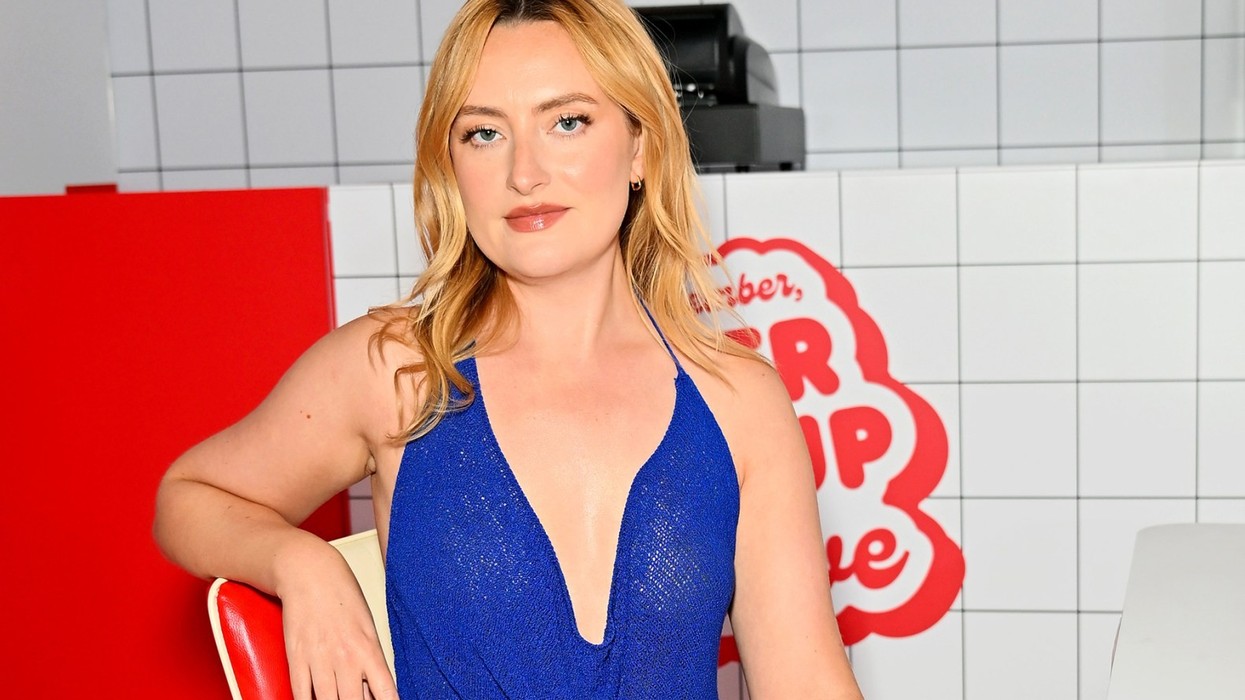
That pretty blonde lady is Hannah Neeleman, aka Ballerina Farm, a Julliard-trained dancer-turned-lifestyle influencer who documents life on a 328-acre farm with her family to her more than nine million Instagram followers. To those who follow the mom influencer space, Neeleman has long been emblematic of a picture-perfect domestic aesthetic: she bakes her own bread, gives birth without medication by candlelight, serves her children freshly drawn raw milk, and swans around her farm barefoot, clad in a seemingly endless selection of ankle-length prairie dresses.
Hannah Neeleman is often referred to as a “trad wife,” a term used to describe a woman on social media who idealizes more traditional gender roles. Though Neeleman does not explicitly embrace this label, and has said she does “not necessarily identify with it,” her followers have often speculated as to whether or not this is true, particularly in light of her own upbringing as a member of the Church of Jesus Christ of Latter-Day Saints, which has often been accused of promoting regressive gender roles.
Though Hannah and her husband Daniel have traditionally steered away from press coverage, that changed on July 20, when Sunday Times writer Megan Agnew published a profile of her titled “Meet the queen of the trad-wives (and her eight children).” The piece, which portrayed Hannah as an exhausted and overwhelmed mother and Daniel as a controlling husband, went viral, prompting a wave of sympathy for her as well as a slew of commenters attacking Daniel on her Instagram. That response in turn triggered a backlash from the right, who insisted that Agnew had approached the piece intent on portraying Hannah as an oppressed trad wife. The backlash became so intense that Hannah herself was forced to weigh in, refuting her portrayal in the Times article and insisting that she and her husband are “co-parents, co-CEOs, co-diaper changers, kitchen cleaners, and decision makers” in their marriage.
Both the Sunday Times piece, and the subsequent right-wing-driven backlash, touched on a growing discourse surrounding trad wives, feminism, and gender roles in a post-Roe v. Wade landscape, and whether content idealizing or romanticizing this view of motherhood is actively harmful to women. But who is Hannah Neeleman, A.K.A. Ballerina Farm, and why do so many people care about her very expensive stove?
Who is Hannah Neeleman?
According to the “about me” section on the Ballerina Farm website, which was updated in the aftermath of the Times article, Hannah grew up with her eight siblings in Utah, with her parents running a small flower shop. She was raised in the Church of Jesus Christ of Latter-Day Saints, which is colloquially known as the Mormon church; her husband Daniel, who is the son of JetBlue CEO David Neeleman — is also a devout member of the Church. (In the piece, Agnew notes that while the Neelemans do not share much about their faith on the Ballerina Farm Instagram, “they mention [them] far more in person than they do online.”)
Hannah grew up dreaming of becoming a ballerina, and was apparently talented enough to be admitted to the prestigious Julliard school when she was just 17 years old. (For context, Julliard’s dance program admits just 18 to 26 undergraduate students a year, according to a 2023-2024 admissions handbook.) She was still an undergraduate when she met her husband Daniel at a college basketball game. According to the Times piece, Hannah was reluctant to get married and have children, telling Agnew: “Back then I thought we should date for a year [before marriage], so I could finish school and whatever. And Daniel was, like, ‘It’s not going to work, we’ve got to get married now.’” By the time she graduated, her first child was born, making Hannah the “first undergraduate ballerina to become a mother,” as she puts it on her website: “Motherhood was my new dream,” she writes. “God was guiding me, as He always had.”
The couple briefly moved to Brazil for Daniel to work as the director of his father’s security company, with Hannah continuing to dance during that time. By the time they moved to their farm in rural Utah, the couple already had three children. They now have eight, and the Neelemans are quick to point out that they homeschool them and raise them on the farm without childcare. They also sell their own trademarked line of kitchen products and goods, including Ballerina Farm-branded aprons, meats, and cookware.
Why is everyone mad about the Times piece?
Pretty much right off the bat, Agnew’s piece depicts Hannah as a long-suffering wife and mother, who set her own dreams and ambitions aside in order to perform her traditional domestic duties. The piece opens with her participating in the Mrs. American beauty pageant, just two weeks after giving birth to her eighth child, subjecting herself to the grueling task of getting pageant-ready while she was still swollen and suffering from postpartum bleeding (though she says she had stopped bleeding by the time the pageant took place).
Throughout the piece, Agnew describes her frustration at getting to speak with Hannah alone, as she is constantly trailed by either her children or her husband. Agnew is particularly scathing in her depiction of Daniel, portraying him as controlling and constantly speaking over his wife. At one point, the Neelemans describe a moment during their courtship when Daniel pulled strings at JetBlue in order to secure a seat next to Hannah on a flight — a moment that the Neelemans clearly want to be perceived as a meet-cute of sorts, but instead comes off as domineering and manipulative.
The piece portrays Daniel as the primary decision-maker of the family, the one who ultimately encouraged Hannah to get married and get pregnant while still in college. Agnew also implies that it is Daniel, not Hannah, who has been the driving force behind her having so many children, all of whom she tells Agnew she gave birth to without medication:
She stops herself. “Except with Martha — I was two weeks overdue and she was 10lb and Daniel wasn’t with me … ” She lowers her voice. Daniel is currently out of the room taking a phone call. “So I got an epidural. And it was an amazing experience.” Where was Daniel that day? “It was shipping day [for the meat boxes] and he was manning the crew.” But the epidural was kind of great? She pauses — and smiles. “It was kinda great.”
By the end of the piece, Agnew appears convinced that Daniel has essentially forced his wife to subsume her own dreams and ambitions to his vision of an ideal family life:
“Our first few years of marriage were really hard, we sacrificed a lot,” she says. “But we did have this vision, this dream and —” Daniel interrupts: “We still do.” What kind of sacrifices, I ask her. “Well, I gave up dance, which was hard. You give up a piece of yourself. And Daniel gave up his career ambitions.” I look out at the vastness and don’t totally agree. Daniel wanted to live in the great western wilds, so they did; he wanted to farm, so they do; he likes date nights once a week, so they go (they have a babysitter on those evenings); he didn’t want nannies in the house, so there aren’t any. The only space earmarked to be Neeleman’s own — a small barn she wanted to convert into a ballet studio — ended up becoming the kids’ schoolroom.
Agnew’s takeaway was shared by many on social media, who expressed their concern about Hannah and their ire for Daniel. “Ballerina Farm is proof that you shouldn’t aspire to marry a rich man. You should marry a generous one instead,” one person wrote. Another wrote: “The husband is a son of a billionaire and couldn’t even give her rest from the dozen babies she’s carried for him for a day. Abuse comes in many ways.”
Many on social media also unearthed some of Hannah’s old posts as evidence of this alleged uneven power dynamic, such as a video in which Hannah opens a birthday present from her husband having asked for tickets to Greece; instead, he gifts her an egg apron (“you’re welcome,” he says at the end of the video, ignoring the clearly disappointed look on her face.) That video seems to have since been removed from the Ballerina Farm Instagram.
Following the outpouring of concern in response to the article, many on the right rushed to the Neelemans’ defense, accusing Agnew of having an anti-family agenda and approaching the piece with the intent of framing the couple’s dynamic as abusive.
“The entire piece is clearly biased with an axe to grind that her husband is this abusive, controlling man,” Brittany Martinez, the founder of the right-wing women’s website Evie Magazine, tweeted. (Evie has since published multiple pieces criticizing the article and defending the Neelemans.) Others essentially accused those who expressed concern about Neeleman of being envious of her lifestyle, with wellness influencer and misinformation purveyor Dr. Tyna Moore characterizing the profile in an Instagram comment as “a hit piece written by a bitter, loveless woman.”
How did Hannah Neeleman respond?
In the days following the publication of the Times piece, the Neelemans stayed quiet until Hannah posted a video on the Ballerina Farm account on Wednesday, July 31. Over footage of her washing her face over a basin, or her kissing her baby in their rustic kitchen, Hannah directly addresses the Times profile, saying that though the Neelemans initially thought the interview went “really well,” they were “taken aback” when they saw the final article, characterizing it as “an attack on my family and my marriage.”
The piece, Hannah said, portrayed her as “oppressed, with my husband being the culprit,” and that this portrayal of their dynamic “couldn’t be further from the truth.” Hannah also echoed the critiques of people like Martinez, saying she believed that the angle of the article was “predetermined.”
In the video, Hannah made a point of asserting that her marriage is strong and healthy, and that their partnership is a mutual one. “Together we have built a business from scratch. We’ve brought eight children into this world, and have prioritized our marriage all along the way,” Hannah said of her marriage. “We are co-parents, co-CEOs, co-diaper changers, kitchen cleaners and decision makers.” She also noted that while the family was not done having children, for now she would focus on being a “mother, wife, a business woman, a farmer, [and] a lover of Jesus.”
Why does everyone care?
The discourse over the popularity of trad wife content on social media, and whether or not it is representative of a general cultural shift toward the right, has long been percolating. Earlier this year, there was a similar discussion over Nara Smith, a TikToker who has been accused of promoting traditional gender roles with videos of her making food for her husband and children from scratch, all while wearing designer clothing and looking flawless. Many questioned how Smith, a mother of three, was able to devote so much time to making such elaborate meals for her family, and whether or not she was setting an unrealistic example for moms and moms-to-be by idealizing the daily drudgery of domestic tasks. (For her part, Smith appears to have leaned into such criticisms, to the degree that she has started trolling her audience by, among other things, partnering with Marc Jacobs to make a video of a designer handbag “made from scratch.”)
In discussing creators like Smith and Hannah Neeleman, the question is not so much whether these women have the right to lead whatever lifestyle they want, and make whatever content they please — the answer is, obviously, of course they do. But for the audience, enjoying such content requires a certain degree of suspension of disbelief, as well as the assumption that these women are truly fulfilled by what they do and have made the choice to lead a life of domestic servitude entirely of their own volition. And in a post-Roe v. Wade world where women’s rights are being systemically stripped away — and where the leading GOP vice presidential candidate has made it abundantly clear that he feels women who do not make the same choices Neeleman did are somehow biologically aberrant — it’s worth questioning this assumption.
What made the Times profile so effective, and so controversial, was that it made it nearly impossible for Hannah Neeleman’s followers to continue that suspension of disbelief. By raising the curtain and providing a glimpse at the Neelemans’ family life, Agnew made a compelling argument for the fact that the idyllic, rustic visions of prairie dresses and egg aprons and $20,000 stoves that we see on social media are not exactly what they seem — something that we ought to assume any time we see an influencer’s content, but a lesson that apparently bears repeating.