
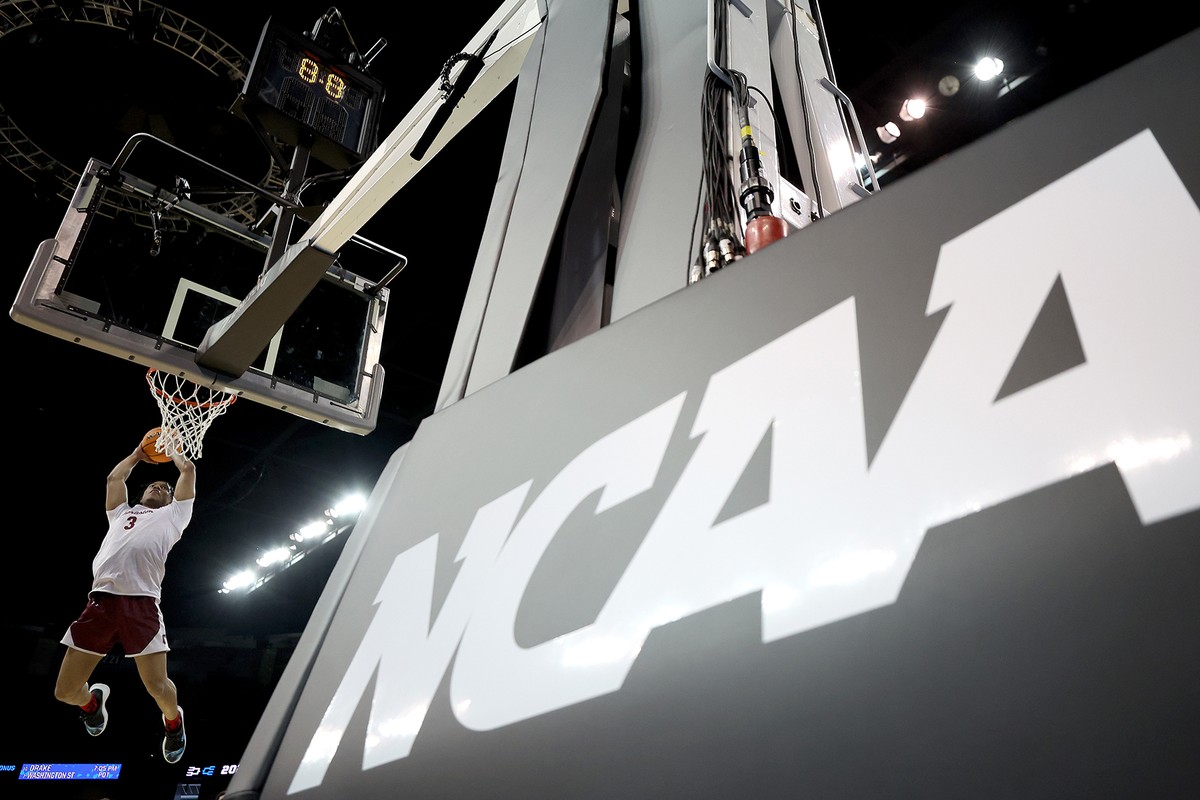

Hypocrisy, greed, deception, and exploitation of labor have a way of catching up with an organization, as I learned while reporting my new book, Hot Dog Money: Inside the Biggest Scandal in the History of College Sports. The NCAA is no exception to these truisms, despite more than a century of profiteering on the backs of student-athletes and zealously punishing anyone with the temerity to do what everyone knew was so widespread as to be both epidemic and endemic to college sports: cheat.
In March, I wrote an op-ed for Rolling Stone predicting the impending demise of the NCAA as we know it. Given the Supreme Court ‘s 2021 decision declaring its determination to end the NCAA’s monopolistic regime of amateurism, and a stream of scandals in college sports, including the widespread existence of bribery revealed in Hot Dog Money, the walls were closing in on the organization. But in all honesty, I didn’t think it would be a matter of weeks before the NCAA appeared to throw in the towel and propose a $2.8 billion settlement with student-athletes, past and present, as some form of reparations and long delayed justice.
The proposed settlement, which would resolve three antitrust lawsuits and pave the way for schools to pay student athletes, leaves a number of questions unanswered, including how women will be compensated vs their male counterparts, as well as what the impact might be on smaller athletic conferences and sports other than football and basketball. But critically missing in this conversation is the idea that the settlement fails to address the most obvious and essential function of an organization tasked with regulating college sports: How to protect student athletes from predatory college coaches, agents, financial advisors, sneaker executives, and the countless runners and hustlers looking to exploit future stars and their families. And what becomes of the generations of student athletes who generated hundreds of billions of dollars in profit for these institutions, coaches, agents and companies? Will these players ever be compensated or are they to be forever kicked to the curb and some magic reset button is hit?
In Hot Dog Money, I reported on the adventures of a former financial advisor to NFL players named Marty Blazer. After being caught in 2013 stealing $2 million from his player-clients, Blazer went undercover for the FBI for three years, wearing a wire in an attempt to avoid prison, with the operation shining a light on the true nature of college sports. According to the feds, every single college basketball coach Blazer offered a bribe to conspire to steer their star players to his financial advisory company eagerly took the cash. You read that correctly: 100% of college coaches at the most prominent programs in the country were more than happy to pocket envelopes containing hundreds of thousands of dollars in FBI money. Sneaker executives were involved, as were the parents of the players, Alabama’s associate athletic director, a former NBA referee, coaches at colleges like Louisville and Arizona and USC, and of course the runners and hustlers who populate the fringes of big time college sports.
The overwhelming portrait that emerged from Blazer’s efforts to reveal the truth of college sports was predation and corruption on an epic level. In the government’s indictment, the colleges were portrayed as the victims of the bribery scheme, but that was a perverse mischaracterization relied on for legal reasons. The real victims were the student athletes who didn’t know that their lives were being trafficked by adults who were supposed to be looking out for their best interests.
The FBI investigation deliberately reeked of mob-related money, with wads of cash and five-star hotels and restaurants in Las Vegas and Miami and Atlanta and Manhattan providing the scenes for a shockingly exploitative crime spree. Despite the stench of organized crime, not one person approached by Marty Blazer and the FBI hesitated in trying to conspire to enmesh future NBA stars like Zion Williamson.
The settlement also doesn’t address the problems with the NCAA’s Name, Image, Likeness program. As constructed, the NCAA provides no protection for student-athletes in striking NIL deals with boosters or others conniving to manipulate them to sign exploitative contracts and profiting in the myriad ways I describe in Hot Dog Money. Of course, setting up systems to monitor and regulate those various advisors in the college sport industry would involve expense, attention to detail, an ethical code and all of that is, well, hard and costly and involves legal jeopardy.
As with the NIL, the settlement proposal perpetuates a multibillion-dollar scam, while avoiding any responsibility for the welfare of the players. What other possible use does the association have, apart from overseeing the various conferences by whacking up the country into territories much like the five families of the New York mafia used to do? If the NCAA isn’t ruled by amateurism, what is the point of the organization? There is zero chance that the Supreme Court will be fooled by the settlement, as Justice Kavanagh made clear in his opinion in NCAA v. Alston that the NCAA can’t escape antitrust lawsuits and its inevitable undoing. As the NCAA tries desperately to justify its continued existence, it is time to consider how the organization might adapt to serve the student-athletes who are its essential constituents.
A far better proposal would be to reverse the proportions going to the NCAA and the students, providing 80% of revenue to the players with 20% going to the organization to provide sufficient funds to set up a functional regulatory system to protect the honesty and integrity of games so beloved by so many. Another obvious and long overdue reform would be dedicate a significant portion of the windfall from the sale of TV rights to the compulsory financial education of all student-athletes in their first semester; an understanding of the schemes and scams like those revealed Hot Dog Money would provide all players a measure of protection as they pursue NIL and other deals.
Sadly, Marty died suddenly of a heart attack in January, aged only 53. His passing was a tragedy for his family, but as the NCAA begins to implode, as Marty had predicted, it is also a tragedy that he’s not here to add his voice to the conversation. As an expert at the art of cheating the NCAA rules, Marty understood the deep cynicism of an organization wrapped in the righteous mantle of amateurism, a reality many recognize but few care to really examine. But I can say with confidence that Marty would want it known that this latest gambit from the NCAA is nothing but yet another game of three card monte. The settlement isn’t the end of the NCAA as we know it, but with massive changes starting to hit it is another beginning of the end.



The NCAA’s $2.8 Billion Pay Deal Is a Game of Three-Card Monte