
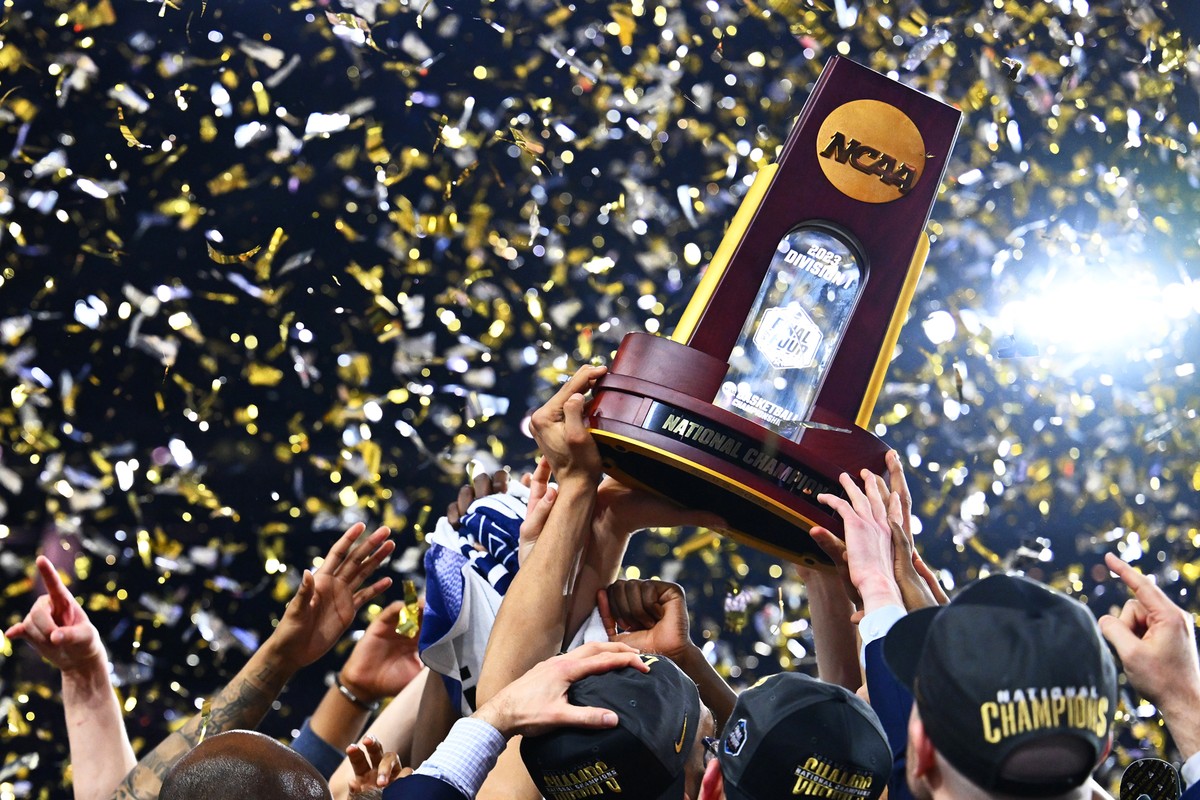

Despite the hype of March Madness, the NCAA as we know it is doomed. Every week there is another story about a lawsuit threatening the NCAA: student-athletes at Dartmouth voting to unionize, kids in California claiming to be college employees, or a tennis player suing for prize money she won at a professional tournament, the litany of legal actions is long and keeps growing. Back in 2021, the Supreme Court announced in NCAA v. Alston that when an antitrust case reaches the court challenging the association’s amateurism regime it will be overturned. As the walls began to close in on college sports, the NCAA resorted to a policy permitting students to be compensated based on their name, image, and likeness —NIL— a regime that is meant to provide some kind of compensation and equity within the existing system. But taken together the recent reforms — the transfer portal, the booster clubs, the secretive and potentially corrupt new methods of recruitment — don’t address the true injustice and hypocrisy of amateurism.
In reporting my forthcoming book on corruption in college sports, Hot Dog Money, I discovered an unexpected reason that the NCAA may soon be undone, and it probably isn’t what you think. Let me explain. In the summer of 2019, a Pittsburgh businessman named Marty Blazer was asked to tell his story to a group of NCAA officials in charge of enforcing the rules of the amateur system. For the prior five years Blazer had been an undercover operative for the federal government in a sweeping investigation of corruption in college sports. Once a financial advisor to NFL football players, Blazer had been caught in a fraudulent ploy to misappropriate more than $2M from his clients to fund his hapless forays into the entertainment industry, including financing an instantly forgettable film called Mafia. Trying to avoid prison, Blazer had confessed to his crimes to the government before he had been indicted, offering prosecutors from the Southern District of New York an unprecedented insider account of rampant cheating and lying in college sports.
Sent undercover by the FBI, Blazer offered bribes to high level college basketball coaches in return for the coaches agreeing to surreptitiously steer their best prospects towards his financial advisory company. Some of the leading basketball programs were directly implicated, with coaches slipped hundreds of thousands of dollars in cash under the table to agree to conspire to convince their top players to sign on as Blazer’s clients — in effect, trafficking the kids. Blazer had been wearing a wire, working in tandem with an FBI undercover, ensnaring more than ten coaches in an elaborate plot that revealed corruption in the basketball programs at Louisville, Arizona, LSU, USC and other schools.
Until Blazer received the request to meet with the NCAA, he had never told his story outside of official circles, but now he sat in a conference room in a hotel near the airport in Pittsburgh with more than a dozen officials arranged on the far side of a conference table.
“I can be your Catch Me If You Can,” Blazer told the NCAA officials, as he explained that he would never be involved in the sports management business again and thus he had no skin in the game. He talked in a frank way that the denizens of the underworld of college sports would never reveal to an outsider, let alone regulators who could change the rules of the game. Blazer described how the system really worked, with the coaches, sneaker companies, agents, financial advisors, boosters and unsavory hustlers and runners engaged in vast conspiracies to evade the rules of amateurism.
“Hot dog money” was the euphemism for the sums of cash Blazer had long slipped college athletes to secure their business when they turned pro. Envelopes stuffed with cash were routinely sent by courier to girlfriends and parents, to avoid a direct paper trail to the players. Bribing coaches was a crucial element of the structure, Blazer explained, as coaches were the trusted advisors and gate keepers for kids and their families; giving a coach cash to push players in Blazer’s direction was a genius business model, with a smart operator able to make millions of dollars from a single kid.
Blazer told the po-faced regulators the number of coaches he had offered bribes who had accepted: one hundred percent. Every single coach offered a bribe had eagerly accepted the FBI’s money. College basketball best resembled an organized criminal enterprise, Blazer believed, with the country whacked into territories as the Mafia had once done.
Blazer then addressed the perils of an NIL program, allowing players to earn money by making deals for the use of their personas. Unless it was implemented properly, Blazer told the NCAA officials, NIL would only make things worse for student athletes — much, much worse. NIL deals would be the teenage student-athletes first brush with the realities of commerce, with boosters and brands and coaches conniving to convince the best players to sign with them — with virtually no protection from the unscrupulous.
“I told them the key was the regulation of NIL,” Blazer recalls in Hot Dog Money. “I told them that if they left NIL wide open — if NIL became the Wild West — an endless parade of dudes like me would prey on the kids. The top players would probably be okay — the kids who could command national attention from reputable companies. But the midlevel kids would be ripped off and lured into terrible contracts with boosters. The kids wouldn’t understand all the ways a clever businessperson could take advantage of them. The NCAA absolutely had to protect the kids, or it was only a matter of time before the NIL system blows up in their face. The NCAA is throwing students to the wolves.”
As Blazer spoke, he told me he noticed a certain glazed look in the eyes of the NCAA officials. It seemed to Blazer that they didn’t want to hear his direct warning about NIL. Their ignorance of the underlying reality of college sport corruption wasn’t due to naivety, it occurred to Blazer — it was the business model. He’d long known that the NCAA oversight was a joke — everyone knew that — but the brazenness of the attitude shocked the former financial advisor.
After speaking for seven hours in detail, revealing many previously unknown conspiracies, Blazer asked the NCAA officials if they had any questions. There were many nuances and surprising twists and turns to Blazer’s tale, so he expected a robust dialogue. No, the NCAA officials said, they had no further questions. Pindrop silence fell. Instead of addressing the portrait of corruption Blazer had presented, the NCAA seems to have preferred willful ignorance — or plausible deniability. (Blazer died this year of natural causes, at 53.)
The NCAA’s failure to provide even rudimentary protections for college kids for their NIL rights — surely a worthy regulatory goal — reveals the hypocrisy and greed that will be at the heart of the demise of college sports as currently constructed. With the Supreme Court predicting the end of the monopoly of college amateurism, the recent termination of the monopoly on real estate agent commissions seems an apt analogy for a deeply entrenched American institution that is fundamentally corrupt. The NCAA is squeezing amateurism for every possible billion, but as Ernest Hemingway once noted about the how rich go bankrupt — gradually, then suddenly — the death of college sports will be fast and furious. What comes next isn’t clear, yet, but as Marty Blazer told the NCAA, the desperate resort to an unregulated NIL program won’t fix a broken system. No amount of March Madness can change that reality.
Guy Lawson is a longtime Rolling Stone contributor, his book Hot Dog Money: Inside the Biggest Scandal in the History of College Sports will be in bookstores this June. Pre-order a copy here:

 David Manheim and Hunter Biden Courtesy of David Manheim

 Koko checks a tracker map for Flock locations. Jack Crosbie for Rolling Stone
 Flock surveillance cameras can be seen in a northern Virginia neighborhood. Jack Crosbie for Rolling Stone
 Inside Koko’s home, a Pelican case is full of electrical gear. Jack Crosbie for Rolling Stone
 Flock camera will take photos of pedestrians even at night. Jack Crosbie for Rolling Stone



‘The Death of College Sports Will Be Fast and Furious:’ The Scandal That Could Kill the NCAA