ZAINAB JOHNSON never intended to be a comedian. Born in Brooklyn and raised in Harlem with her 12 siblings, she was neither the family jokester nor the class clown.
“I always considered myself a very serious person,” she says. “I’m the person that is annoyed by the class clown, and that’s what’s funny about me: The class clown is going to get on my nerves, and I’m going to tell everybody and imitate him or her.”
But around the age of 10, her mother sneaked her into Harlem’s Uptown Comedy Club to watch her first stand-up performance. Her mom’s decision to bring Johnson was random — she could have taken her husband or one of Johnson’s four older siblings — but she picked her. When Johnson tells me about the trip that became the first of many steps leading to a career in comedy, it was as if she was always destined to be on the stage.
Now, two decades later, Johnson has performed stand-up at local clubs across the country, is a regular on the Amazon science-fiction comedy-drama series Upload, and co-hosts the quirky Netflix documentary series 100 Humans: Life’s Questions, Answered — and last fall, she scored her very own Prime Video hourlong special, Hijabs Off. Johnson’s set balances the intersections of her identity as a Black woman, her large family, navigating the dating minefield, and her faith — while also poking fun at Hollywood’s lame attempts at promoting diversity and inclusion. “I got three strong ones,” Johnson says in the special. “I’m Black, I’m a woman, and I’m Muslim. That’s the diversity trifecta.”
Johnson opens the show by asking the audience if there are “any Muslims in the house?” followed by the greeting “Al salam ‘alaykum.” The crowd roars back “Wa ‘alaykumu s-salam.”
Then, she jokes matter-of-factly, “We ain’t never seen that on a comedy special.” It’s a moment that exposes the scarcity of Muslim voices in the comedy world. Johnson’s raw honesty onstage is paired with immaculate comedic timing, making her viewers both howl with laughter and reflect on their culture.
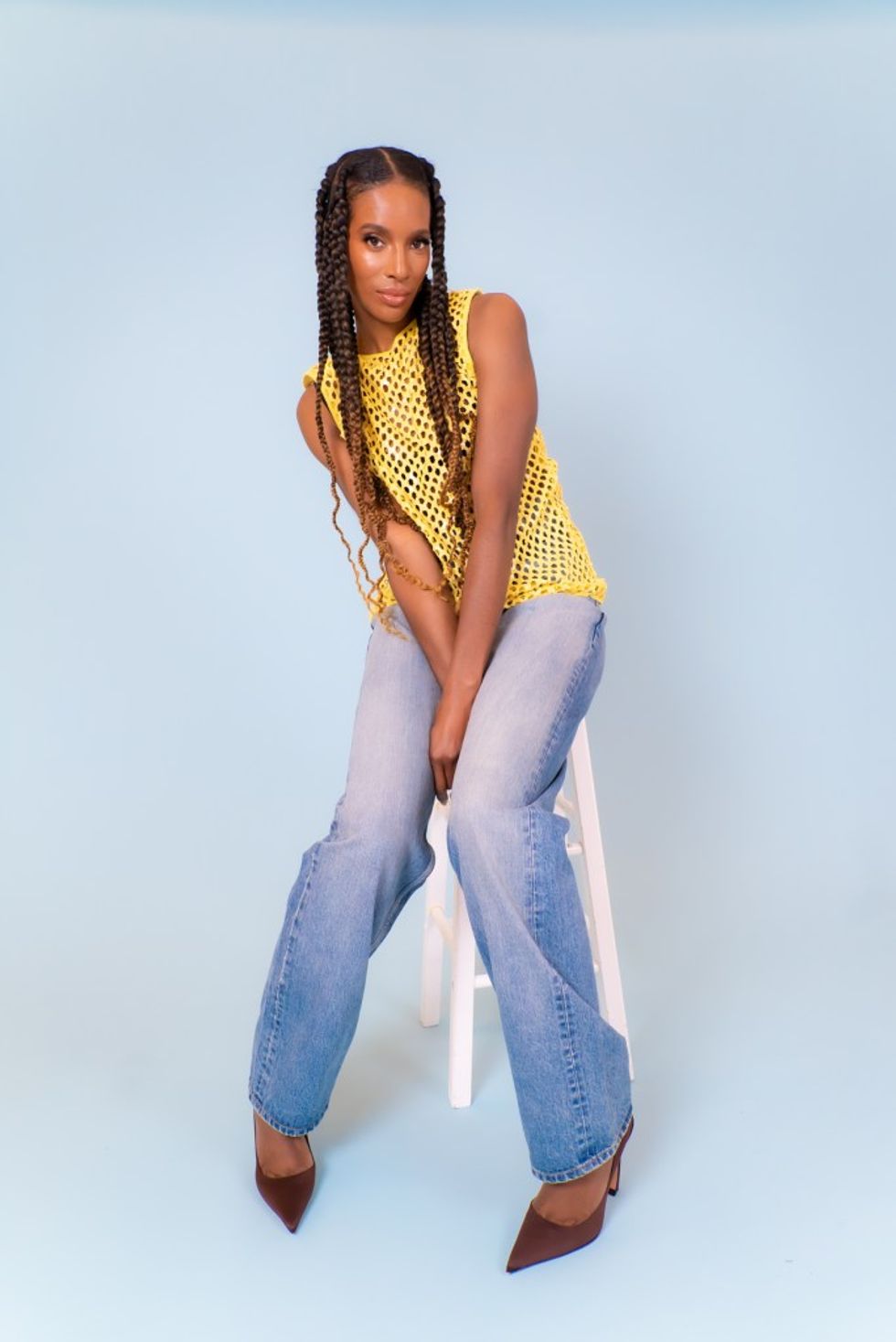
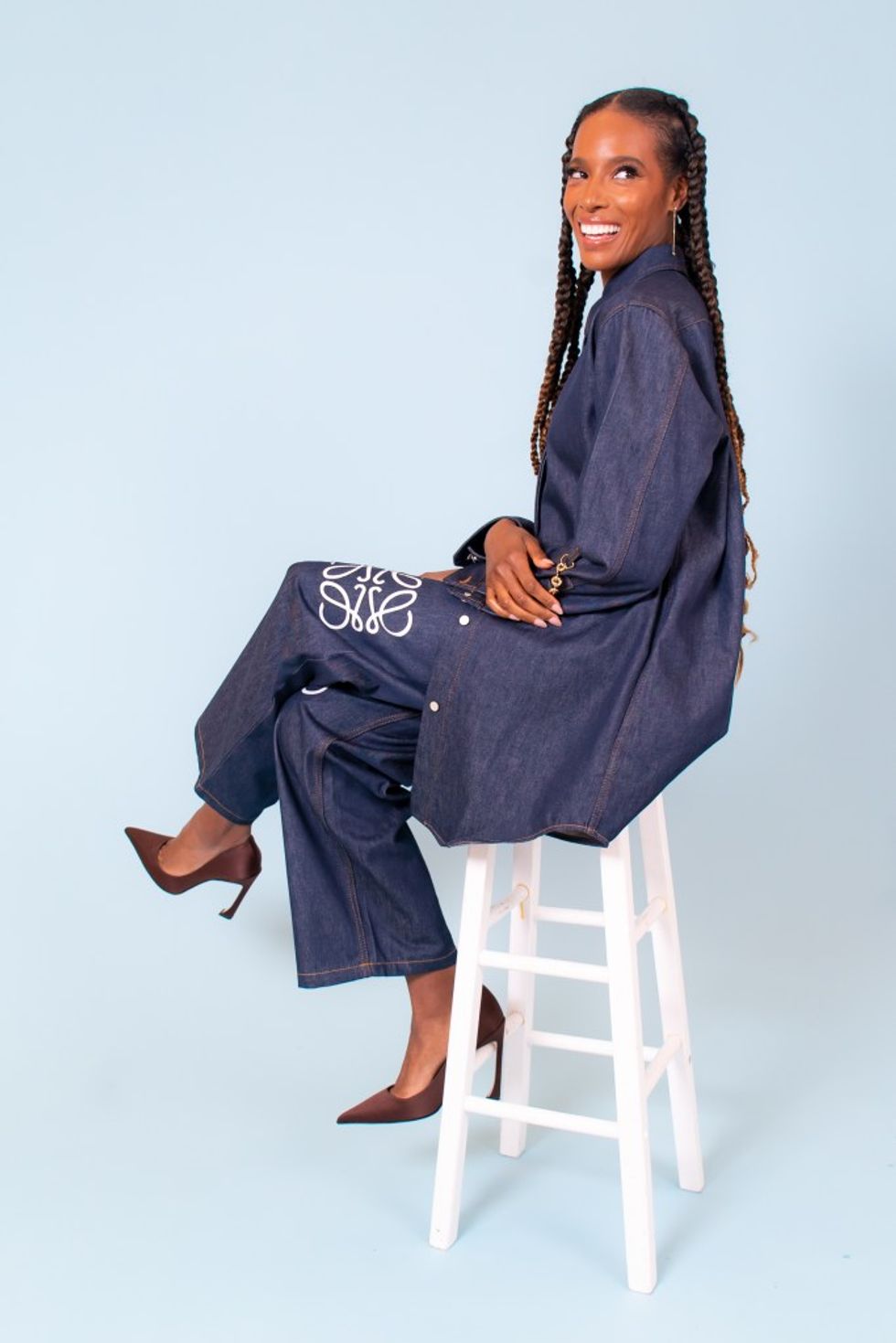
“I be out in the street with a ripped jean. I’m good for a hole in the knee,” Johnson jokes as she describes why the “haram police” are often after her for her sartorial choices. The day we talk in Manhattan, Johnson wears wide-legged jeans, a sheer lemon-colored tank top, and pointed heels. “The guys, they got to go out there and march for us,” she continues. “They gotta be like, ‘Let the ladies show their knees. We don’t care about no knee.’ Think about it. Have you ever heard a guy be like, ‘Yo, the one with the knee?! Ughhh!’ ” she says with a moan that sends the crowd into a fit of laughter. “Have you ever heard that? Like, ‘It was the knee for me!’”
Johnson’s parents were both raised Christian, and converted to Islam later on in their lives. Her father joined the Nation of Islam while in the Navy during the Civil Rights era, when many Black people were in search of a new spiritual identity to combat the racism they experienced in America. Her mother converted in college after never relating to the Bible’s stories.
Johnson remembers religion being a bright spot in her family’s life. But she faced discrimination and bullying, as well. As a child who wore a khimar, a headscarf covering her head, neck, and shoulders, she was constantly asked questions about her hair, ranging from its texture to its very existence. When she was in second and third grade, she recalls, she got her khimar pulled off her head.
Then there were the twin struggles of not seeing positive representations of herself in popular media and watching her friends get all the dating attention. It wasn’t until her schoolwide dress-up day, sporting her older sister’s Junior ROTC uniform and wearing her hair out, that Johnson realized just how differently she was perceived.
“It was like the movies, when the girl takes off her glasses and comes down the stairs. Everybody was like, ‘You’re so pretty, you have so much hair.’ Once I got that, I didn’t want to go back. It was peer pressure,” Johnson says.
She finally stopped wearing her hijab for good to play basketball. She says, “I would have stopped wearing it earlier because I didn’t like it. Nobody ever made me feel good about it. I was Black and I was wearing a hijab, and I got bullied.… It was the first time I had a viable excuse to convince my father. I’m not proud of that, but that’s the truth.”
Johnson’s relationship with her family often takes center stage in her comedy performances. On Late Night With Seth Meyers, she told a story of growing up in a big family — in her signature dry and skeptical delivery.
“I am one of 13. My mom wanted 20. She made it to 13. When I was in second grade, she had kid number 10. And I was like, ‘This has got to stop,’” Johnson starts, breaking into a wide smile. “I asked my mom to get her tubes tied when I was in second grade. I have no idea how I found out about tube tying. Maybe I was so fed up I sat in front of a stack of encyclopedias and was like, ‘There has to be an answer!’”
While her mom was raising Johnson and her siblings, she was also studying theater at Queens College. She had her kids perform a scene from Lorraine Hansberry’s A Raisin in the Sun for one of her class assignments.
“I remember it because I knew we weren’t supposed to be there,” Johnson tells me with a laugh. “We memorized it [traveling] from Harlem to Queens College. That was the amount of time we had to work on what she gave us.”
Johnson, who played Beneatha — the independent and college-focused sister of Walter Younger — learned that she was a natural. Following their performance, and a passing grade, Johnson’s mother told her, “My professor said it was because of you. [They said] that daughter of yours.” And still, Johnson hadn’t caught the performing-arts bug. “I didn’t take that as ‘Let me pack my stuff and go to L.A.,’” she says, and recalls joking to her mother, “‘Why you had us go to your school?!’”
Instead of fully committing to theater, Johnson dove headfirst into athletics, dabbling in track and field before settling in as a small forward/point guard in basketball. As a freshman at Harlem’s Manhattan Center high school, she helped the varsity team make it all the way to Madison Square Garden for the state championship.
By her senior year, Johnson had plans to play basketball at Spelman College in Atlanta, and maybe go on to the WNBA one day. “I had aspirations to go professional, even if it meant going overseas,” she recalls. “But I got hit by a truck, and that changed everything.”
She was “changed physically,” she says, and is now legally disabled. “It took a long time for me to heal” from getting hit, Johnson says. “Once I got past that, it was like, ‘Well, God, what did I do to deserve that?’ And then it moved into a space of gratitude. There was another girl that got hit, and I remember thinking that my situation was so bad, and then seeing her shifted my worldview.”
After Johnson’s recovery, she took another stab at basketball, playing for the City College of New York, which led to an ACL tear. So she pivoted to academics, pursuing a degree in education and mathematics to become a high school math teacher. But she didn’t stay on that path for long.
“I met a girl who was a spoken-word artist and was into music, and we became best friends,” Johnson says. “She was like, ‘When I graduate, I’m moving to L.A.,’ and I was like, ‘All right, I guess this is the plan?’”
When her father died in 2005, things all came into focus for Johnson.
“It was a good motivator for me because I realized I didn’t want to have any regrets,” Johnson tells me. “My father’s death was sudden, health-related but sudden. I spent a lot of time with my mom and my siblings, and it made me realize time is of the essence and tomorrow isn’t promised. I knew life was out there for me to find, and knew I had greater aspirations, but I didn’t know what it was. Then a couple years later, comedy revealed itself.”
Once in L.A., she googled “open mics near me” and wrote five-minute sets about not eating pork, her “criminal brother,” and her parents having 13 children. The crowd responded well, and she found her new purpose. As she transitioned into longer sets, higher-ups in the entertainment world took notice.
Her profile was raised considerably after advancing as a semifinalist on Last Comic Standing in 2014. She’s since been featured on HBO’s A Black Lady Sketch Show, Hulu’s Ramy, and has more projects on the horizon. When she looks back on her path here, it all makes sense — each twist and turn. Like it was always supposed to happen.
“I’m looking forward to telling my own story and meeting new fans on the road,” she says. “Hijabs Off opened me up to a larger audience, but the sky is not the limit. We are going beyond the sky. I can’t plan what God has for me. I’m just going to walk knowing that I’m going through doors, and what’s through those doors, that’s God.”