
The new Netflix miniseries Eric asks one of the universal questions: What if Jim Henson was an emotionally abusive drunk, his son went missing in mid-Eighties New York City, the investigation involved crooked cops and a queer nightclub and an underground encampment for the unhoused, and Henson began hallucinating conversations with his newest Muppet as a way to cope with all of this?
You know, that old chestnut.
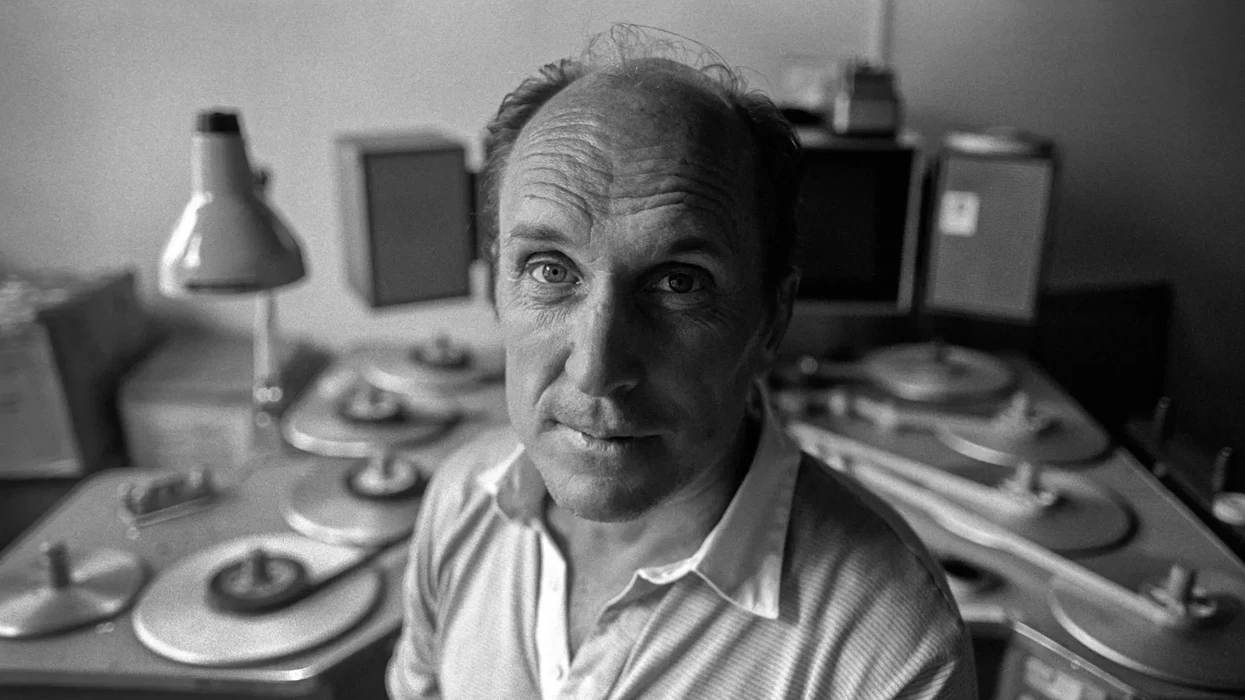
Technically, Benedict Cumberbatch is not playing Henson, but a fictional peer of the late, great puppet master: Vincent Anderson, creator and chief puppeteer of a beloved, long-running public television kids show called Good Day Sunshine. In one episode Vincent and his producer Lennie (Dan Fogler) even discuss a past encounter with Henson, which is perhaps Eric creator Abi Morgan’s way of ensuring that no one mistakes the man she’s writing for the genuine article.
Nonetheless, Eric all but demands to be looked at through a Kermit the Frog-shaped lens. Good Day Sunshine, like Sesame Street (where Henson first introduced Kermit, Ernie, and so many other iconic Muppets) in its Seventies heyday, functions as a bright mirror reflection of the Big Apple during its grimiest and most worm-infested era, and has a similar flower child ethos. (Its motto, which adoring children recite at the end of each episode: “Be good, be brave, be kind, be different.”)
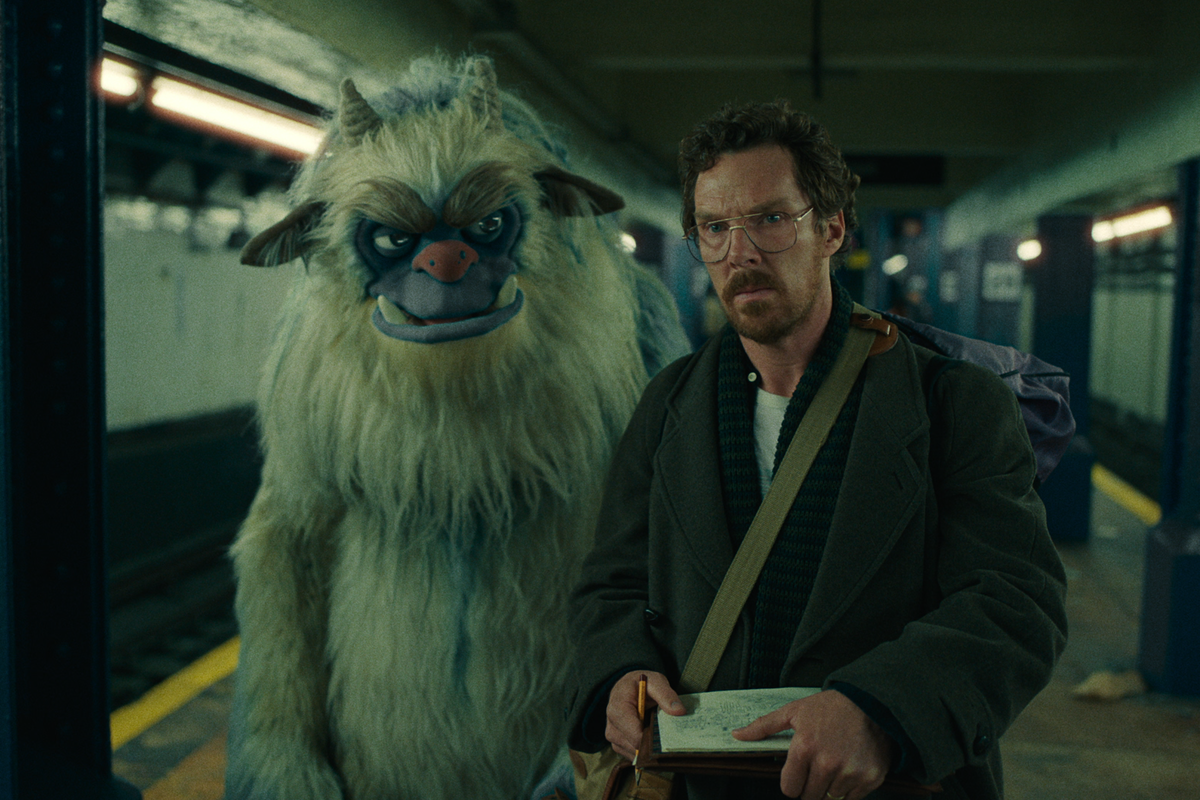
When Eric begins, though, both the show and its creator have seen better days. The public TV bosses, eager to stay in the zeitgeist, are pressuring Vincent and Lennie to add a character with a boombox. Vincent’s marriage to Cassie (Gaby Hoffmann) has degenerated into nonstop fighting. And while their son Edgar (Ivan Morris Howe) loves Vincent’s work enough to want to create a new puppet — the titular Eric, a gruff but ultimately kind giant monster, who looks less like Sweetums from The Muppet Show than a live-action Sully from Monsters, Inc. — he’s grown understandably wary of his father’s volatile behavior. After witnessing yet another vicious argument between his parents one morning, Edgar tries making the short walk to his elementary school on his own and vanishes somewhere in between. Given Vincent’s celebrity — as well as the influence of his real-estate mogul father, Robert (John Doman from The Wire) — missing persons detective Michael Ledroit (McKinley Belcher III) is ordered to throw every NYPD resource at the case, even if it means that Vincent himself turns out to be responsible for whatever happened to Edgar. And as his life is ripped apart at the seams, Vincent starts seeing a three-dimensional Eric, heckling him wherever he goes.
Abi Morgan’s writing career in the U.K. has tended to shift back and forth between issue-oriented dramas (the 2005 BAFTA-winning Sex Traffic) and historical ones (The Hour, about a Fifties BBC news show, with Ben Whishaw, Dominic West, and Romola Garai). This is a period piece, set in the same era as much of her script for the Margaret Thatcher biopic The Iron Lady, but this time across the pond. It’s a huge swing, not only in taking place so far from her home, but trying to cover so much socioeconomic territory through Ledroit’s investigation, and in trying to meld sprawling, Richard Price-style urban fiction with the literal fantasy element of Eric becoming Vincent’s traveling companion.
In the end, Morgan and her collaborators (including director Lucy Forbes) are probably trying to squeeze too many concepts and tones into six episodes. But the ideas behind Eric — both the Netflix show and the cranky puppet within it — are intriguing enough, and most of the execution effective enough, that it’s always interesting, even when it’s messy.
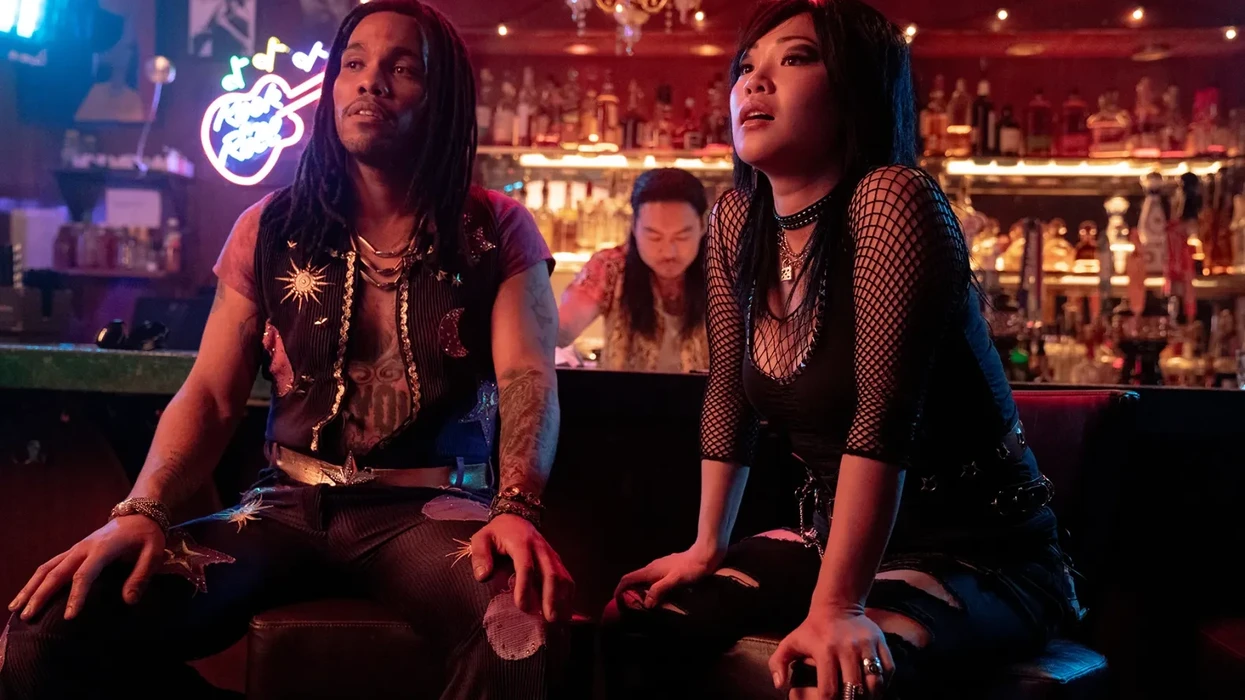
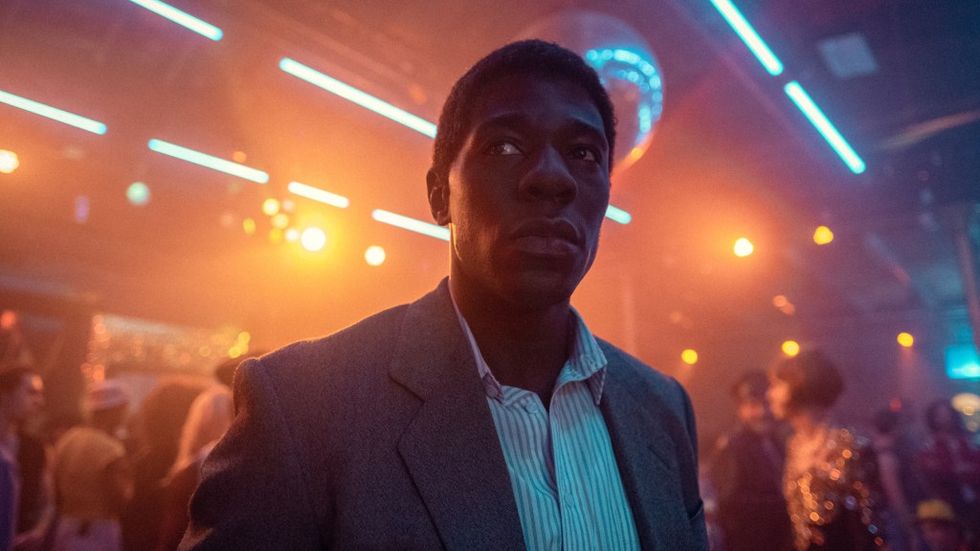
Manhattan of the Seventies and Eighties, before Rudy Giuliani’s election to mayor and subsequent use of draconian police tactics to clean up the city, can be difficult to dramatize without falling into caricature. HBO’s The Deuce pulled it off. The New York of Eric feels a bit too much like a dark, larger-than-life vision — or, at least, like a tourist’s view — to be as effective as it wants to be in contrasting its reality with the sequences where Vincent and Eric are arguing, or doing lines of cocaine together at the nearby Lux nightclub.
The Lux also becomes a focus of Ledroit’s search for Edgar, even though it’s clear he has a long history with the club’s owner, Gator (Wade Allain-Marcus), that makes it hard to be objective on that subject. The tentacles of the case extend to the club, the AIDS crisis for gay men during this period, pre-Giuliani attempts to clean up the streets by any means necessary, and more, in ways that both deepen the story and interfere with it. The missing-child investigation is so urgent and emotional that it all but overwhelms everything else in the early chapters, making largely unrelated subplots — including one about political fights backstage at Good Day Sunshine — feel distracting. As if to acknowledge this, Morgan tells the audience a lot about what happened to Edgar by midway through the six-episode season; that allows the other stories to seem more vital, but sucks a lot of suspense out of the main plot.
Yet even with all that, the concept is so compellingly weird, and Cumberbatch and Hoffmann are so believably raw as these damaged, feuding, terrified parents that Eric works even in the moments when it seems to have lost the thread. And the world of Good Day Sunshine ultimately succeeds in anchoring everything else. When Cassie asks Lennie why he, Vincent, and so many others are obsessed with puppets, Lennie suggests, “They get to say the things that we can’t.”
Morgan is of course far from the first person to look at the world Jim Henson created and see more adult possibilities. The Tony-winning musical Avenue Q made the gay subtext between Bert and Ernie into text for bickering roommates Rod and Nicky, and had its Cookie Monster analogue sing a song called “The Internet Is for Porn.” Homicide cop Melissa McCarthy teamed up with a puppet private detective in 2018’s The Happytime Murders. Modern TV shows like Greg the Bunny, Wonder Showzen, Kidding, and more have used Muppet-esque characters for variably adult purposes.
For that matter, Henson himself tried early and often to avoid being defined solely as a children’s performer. For the first season of Saturday Night Live, he created a group of puppets for a recurring sketch set in a fantasy world called Gorch. One of the early pilot episodes for what became The Muppet Show was subtitled Sex and Violence. And once he had successfully taken Kermit, Fozzie, and Miss Piggy to the big screen, Henson used his Hollywood blank check to make more intense, less kid-friendly fantasy films The Dark Crystal and Labyrinth.
Henson’s attempts to avoid typecasting weren’t much appreciated in his lifetime. The SNL staff hated writing the Gorch sketches, the studio audience didn’t laugh at them, and they were dropped midway through that season. The final iteration of The Muppet Show was much more geared toward families. And while Dark Crystal and Labyrinth have both become cult classics, they received mixed responses in the moment from critics and audiences.
But given his desire to take puppetry to strange, adult places, and given that Morgan does pretty clearly delineate Vincent from the man who inspired him, I can’t help thinking that the actual Jim Henson might have really enjoyed Eric.
All eight episodes of Eric begin streaming May 30 on Netflix. I’ve seen all eight.