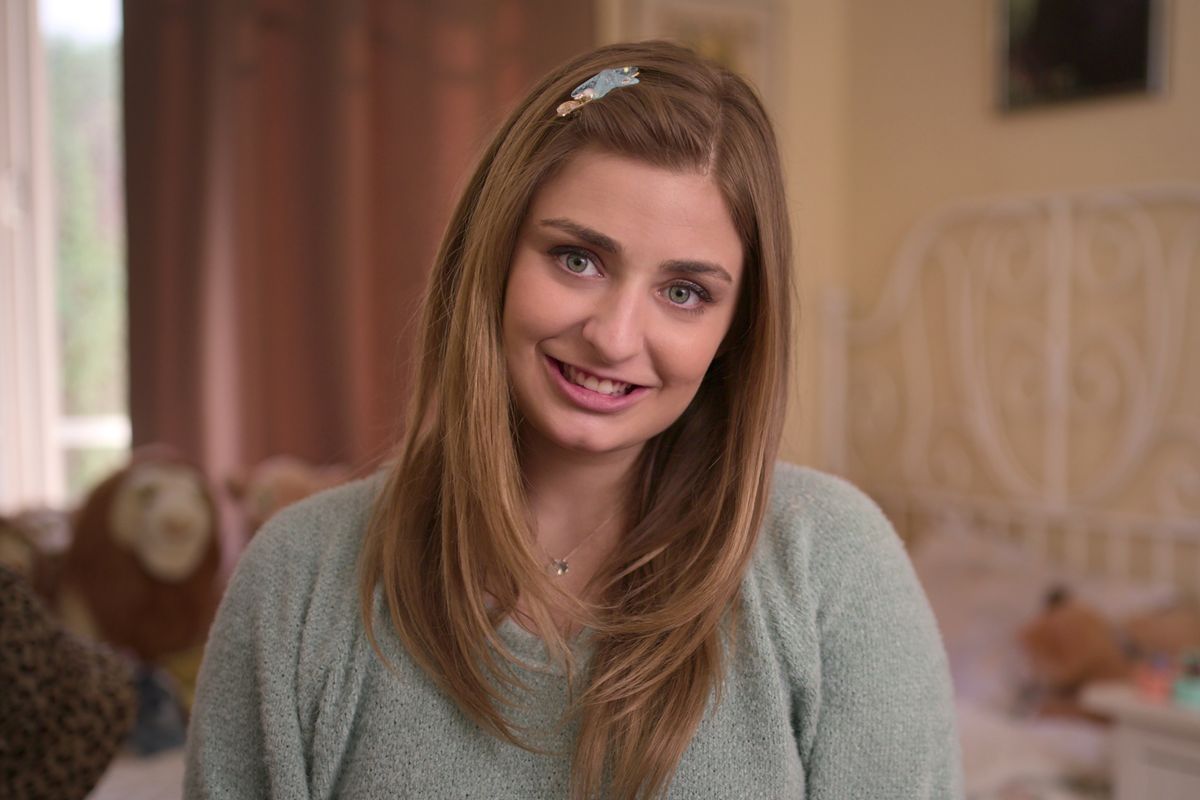

When Abbey Romeo, 25, was little, her favorite Disney princess was Ariel from The Little Mermaid. “She’s a mermaid who wanted to be with the humans, just like how I wanted to be with neurotypical people,” she says. “And when she finally became human, she couldn’t talk. She felt isolated and alone. And that’s how I felt.” She struggled with communication, and had immense difficulty joining conversations. “I wanted to speak but the words wouldn’t come out,” she recalls.
When she was nine, Abbey asked her mother, Christine, if she was autistic. At the time, she was attending a school for neurodivergent children, having transitioned out of a mainstream school when she was in the second grade. Abbey had always known she was different — “My brain wouldn’t do what I was telling it to,” as she puts it — but she never had a word for it until that moment. When her mother told her that she was autistic, and that she had been diagnosed when she was two and a half, Abbey cried, and her mother cried along with her. “I didn’t want to have autism,” she says. “I wanted to be typical.”
Today, Abbey no longer feels like Ariel — if anything, she’s closer to Nala, the lioness in The Lion King, her other favorite Disney movie. Having appeared on two seasons of Netflix’s Love on the Spectrum, the hit dating show for adults with autism, she has found her Simba — David Isaacman, who at the end of Season 2 whisked her away on an African safari adventure, culminating in the two of them duetting “Can You Feel the Love Tonight” in a feel-good moment that went viral on TikTok. And she’s also a major celebrity on the social-media platform, where she regularly documents her romance with David, models her homemade hats (she has her own hat business, Made by Abbey), and performs original songs.
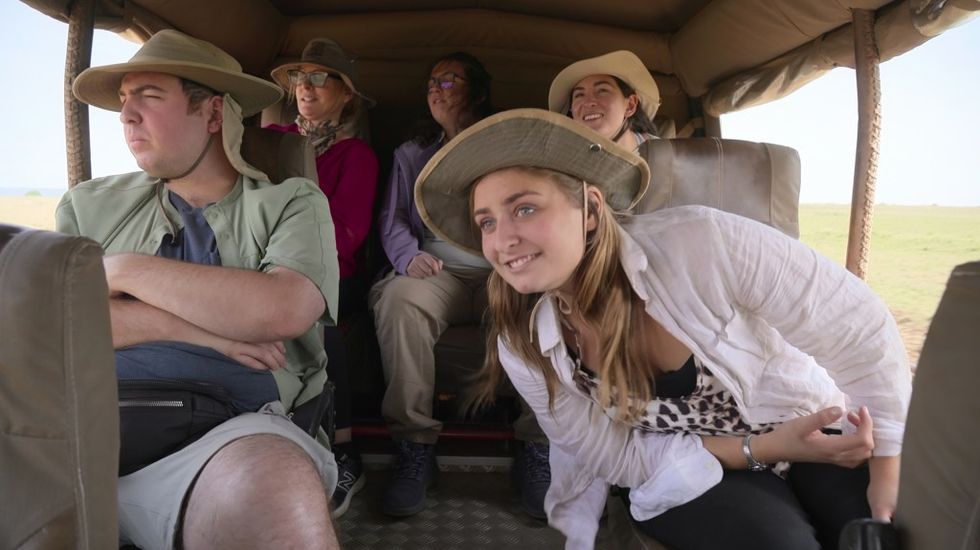
TikTok is also a place where Abbey has learned to try new things, something people on the spectrum, who tend to rely heavily on routine and schedules, can sometimes be averse to. In her videos, she exhibits her newfound propensity for activities like eating escargot (though her favorite food is lima beans, just like the character in her favorite children’s book, A Bad Case of Stripes), swimming (she learned to swim when she was 17, overcoming her fear of the water to try out waterslides like a “giant toilet bowl water slide where you fall into a big hole”), and swearing (“I’m an adult and I can swear if I want to,” she says in one video with more than 33 million views. “[And] I’m angry about the fucking rain.”)
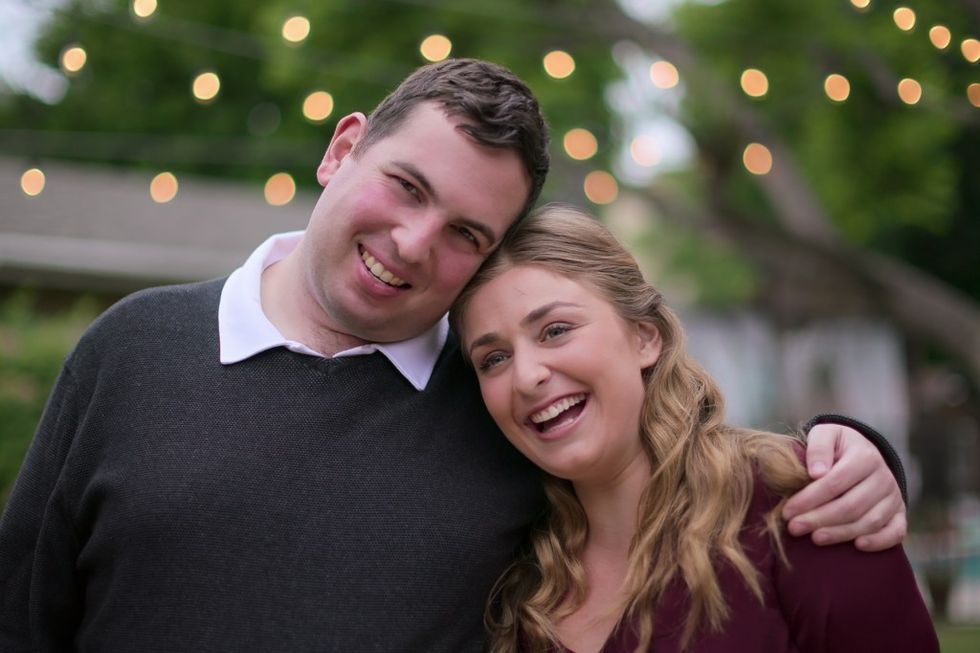
Abbey’s unmitigated candor and upbeat attitude have won her more than 1.8 million followers on the platform, many of whom find her relationship with David aspirational. “This is honestly one of the healthiest relationships in America I love u guys sm!!,” says one top comment on a video where the two demonstrate how they’ve memorized each other’s stuffed animals’ names.
Abbey has been on social media for the past four years, with her cousin Mary helping her to shoot and edit her videos. (“All the buttons and the small fonts and stuff, that part is really hard for me,” she says.) She has been performing since she was 12 years old as a member of Spectrum Laboratory, a performing arts program for people on the spectrum, where she wrote original songs and made up characters like Captain Sandy Sandstorm, a half-mermaid with a Southern accent “not like Sandy the Squirrel from Spongebob, but a different Sandy,” she says.
In 2021, Love on the Spectrum co-creator and producer Cian O’Clery, who had met Abbey at Spectrum Lab, contacted Abbey and Christine and asked if they wanted to appear on the show. Abbey was interested — “I’ve always wanted a boyfriend,” she says. “I had one [in high school], but he disappointed me” — but Christine was skeptical. “It seemed like it was too much pressure for her to have this camera buzzing around,” she says. She also wondered if Abbey would be as independent as many of the adults on the show. “He said, ‘We want to just tell her story as she is,'” she says. “And when he said that, I felt she would be safe and she could be herself. She could get up and walk away and leave the room, and not have to follow instructions or perform or communicate if she didn’t want to.” (Abbey is, indeed, seemingly adroit at advocating for herself and her own limitations: about an hour into speaking with Rolling Stone, she politely requested we end the interview so she could go and eat some scones.)
From the very beginning of the show, Abbey was optimistic she would find love. But her first date with David, in which they went to a wildlife center — “I had a pink top on and I met other animals. I saw a fennec fox, bobcats, lynxes, and more,” she says — was beyond her expectations. “My love of David has changed me tremendously. He understands my autism and I’ve memorized all the names of his stuffed animals,” she says. “And he helps me cover my ears when I hear a certain noise. He knows I don’t like the sound of a crying baby or a dog barking or a rooster crowing.”
Christine is similarly enamored with David. “He is one of the kindest, sweetest, most heroic men I’ve ever gotten to meet,” she says. “He understands her, he understands her autism. When she has a sensory trigger, he can notice it and help her calm down, and he is the biggest gift I could ever hope for. And I know we all want that for our children, whether they’re on the spectrum or not.”
Abbey’s relationship with David has garnered her a huge fan base on TikTok, where the two serve as something of a template for neurotypical couples who may struggle to navigate communicating their feelings for each other. In another video, a relationship therapist analyzes the moment in which the two duet “Can You Feel the Love Tonight,” using it as a jump-off point to ennumerate healthy relationship tips such as radical honesty and open communication.
Even in the troll-heavy TikTok landscape, Abbey’s comments section is by and large supportive, a bastion of positivity. But that is sometimes not the case for her mother, Christine, with some commenters accusing her of pushing Abbey into the spotlight without her consent. Abbey is well aware of the backlash: “Unfortunately, people can be mean to my mom. We call them ‘the haters,'” she says. “I say they’re like the sea witch, the old hag, and even Mufasa’s brother. My mom has helped me get to where I am today. I just want people to be nice.”
Christine, a former entertainment industry professional who quit her job to raise Abbey and her brother on her own after becoming a single mother when Abbey was six, is wounded by the criticism of her parenting, particularly when it comes from other members of the autistic community. “People say what you’re doing is wrong, that you shouldn’t do that therapy for her, that she should be living on her own and driving a car,” she says. “I try to remember that person’s in pain. I try to have compassion for them. But I will tell you, the amount of of vicious hate is absurd.” She also believes that being on camera and performing has been tremendously helpful for her daughter. “The music and acting and on camera stuff has been crucial to her growth and success just as much as speech and occupational therapy,” she says.
Abbey has used her newfound fame to promote her hat business and a burgeoning music career, writing songs about subjects close to her heart, such as overcoming her fear of waterslides. Her upcoming music video for her song “Categories,” about her tendency to place things in categories as a means of verbally expressing herself, will be released on April 2. “It’s about how I put certain things I like together and certain things I don’t like together,” she says. “[Such as], witches eat hot peppers. And princesses eat cake. That’s what the song is about. How I understand the world better to get my words out.”
These days, Abbey no longer feels like the Little Mermaid, silently navigating an unfamiliar world. She has dreams of a big future, involving “living in a big mansion with David with a kitchen full of sweets and other foods where we train animals in the backyard.” She wants to perform her music live on stage, “just like Miley Cyrus.” And pretty soon, she hopes to get married.
“I’m scared, because I’ve never done it,” she says. “But I could get married sometime next year. Probably in late 2025. I’m a little nervous-cited to get married, which is when you’re nervous and excited at once. I’ve always wanted to, and now I’m so close.” Her ideal wedding is as follows: “Somewhere maybe near the beach in paradise. I’ll probably serve sweets there and all my favorite foods will be there, including lima beans.”




 Nick Wilde from Zootopia greets fans during the Magic Kingdom parade. Kenslie McGuire